
2026 Toyota C-HR BEV
2026 Toyota C-HR BEV: Everything You Need to Know
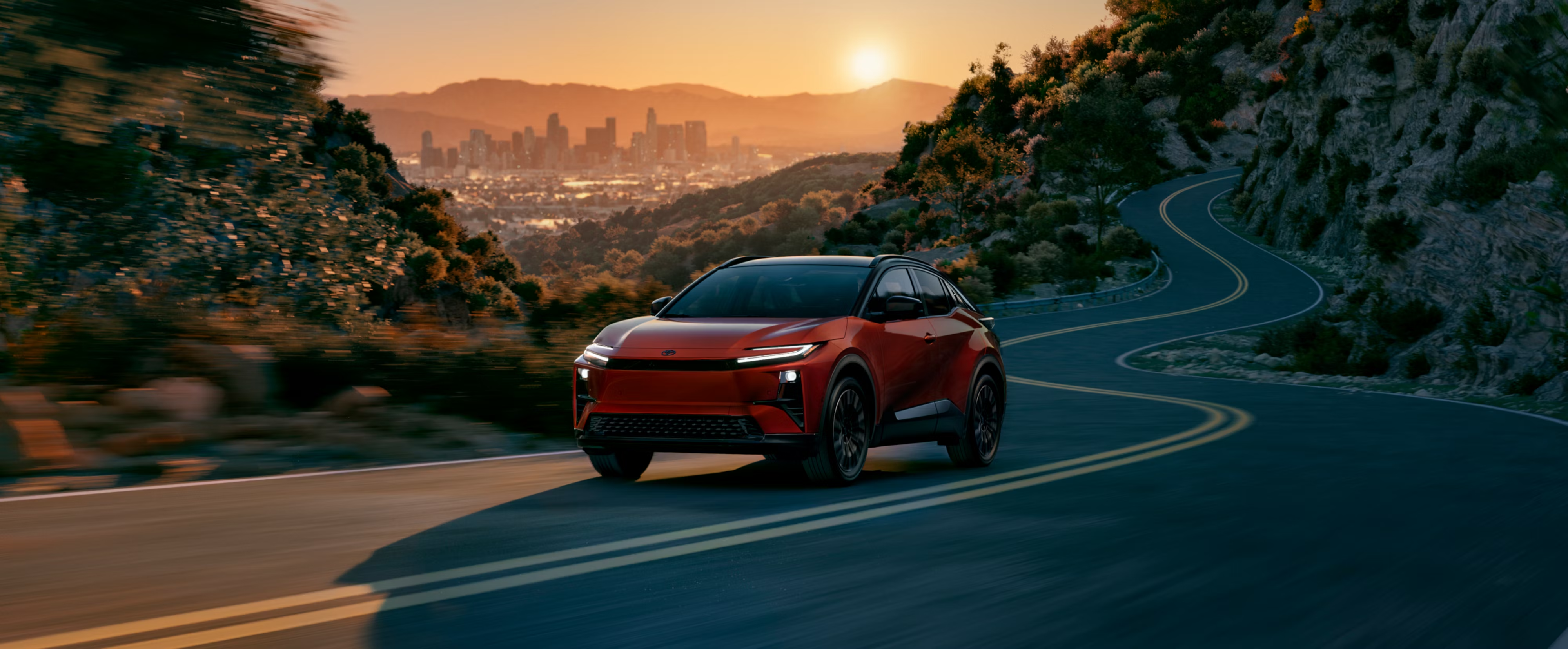
The automotive world is rapidly shifting toward electrification, and Toyota is gaining serious momentum with the highly anticipated 2026 Toyota C-HR BEV (Battery Electric Vehicle). If you’re new to electric vehicles (EVs), don’t worry—this compact electric crossover is designed to make the transition easy and exciting. It combines bold, head-turning styling with efficient zero-emission performance and the everyday practicality that makes driving enjoyable. But what exactly is an EV, and why is the C-HR BEV a game-changer in this space?
First off, a Battery Electric Vehicle, or BEV, is simply a car powered entirely by electricity stored in a battery—no gas tank, no engine that burns fuel. Instead of a traditional internal combustion engine, it uses electric motors to propel the vehicle. This means no tailpipe emissions, quieter operation, and potentially lower running costs over time. The Toyota C-HR BEV builds on the popular C-HR lineup, which has been a favorite for its sporty crossover design since its debut. The “BEV” version takes that foundation and electrifies it, offering a fresh entry into the growing world of compact electric SUVs. For those unfamiliar with SUVs, they’re versatile vehicles that sit higher off the ground than sedans, providing better visibility and space for passengers or gear, while still being nimble enough for city streets.
Toyota, a Japanese automaker renowned for reliability and innovation, has been a leader in hybrid vehicles for years (hybrids combine gas and electric power). Now, with the C-HR BEV, they’re fully embracing pure electric technology. This model targets urban and suburban drivers who want style, efficiency, and modern features without the complexity of larger EVs.
Will the 2026 Toyota C-HR BEV Still Have That Bold, Stand-Out Styling?
Yes! If you’re picturing a car that blends the sleekness of a coupe (a two-door sports car style) with the utility of an SUV, the 2026 Toyota C-HR BEV delivers just that. For beginners, the original C-HR—launched back in 2016—turned heads with its unconventional, angular design. It featured a sloping roofline that gives it a fastback appearance, sharp creases along the body panels that add a sense of motion even when parked, and hidden rear door handles that make it look sleeker from the side. The electric version preserves all of this drama while evolving it for the EV era.
What does that evolution look like? The C-HR BEV introduces aerodynamic (aero) wheels, which are specially shaped to reduce air resistance and improve efficiency—a key consideration for electric vehicles since every bit of drag can sap precious battery range. You’ll also spot blue accent details, often used on EVs to signal their electric nature, and a fully closed front grille. Traditional cars need grilles for engine cooling, but EVs don’t have hot engines, so sealing it up helps the car slice through the air more smoothly. This futuristic touch enhances the aggressive stance, with wide fenders and a low, planted profile that says “sporty” without shouting.
Beyond aesthetics, this styling serves a purpose. The coupe-like roofline not only looks cool but also contributes to better aerodynamics, potentially extending your driving range. For someone new to cars, think of it like this: just as a swimmer wears a streamlined suit to go faster with less effort, the C-HR BEV’s design helps it travel farther on the same amount of “energy” (electricity). Color options are expected to include vibrant hues like electric blue or fiery red, alongside neutrals, allowing personalization that matches your personality. In essence, the 2026 C-HR BEV isn’t just a practical EV—it’s a statement on wheels, proving that going green doesn’t mean sacrificing flair.
Delving deeper into the design philosophy, Toyota’s engineers drew inspiration from nature and technology. The sharp lines mimic the facets of a diamond, symbolizing precision and luxury, while the overall form echoes the agility of a bird in flight. This isn’t mere marketing fluff; these elements are optimized through computer simulations to balance form and function. For SEO enthusiasts or those researching compact EVs, keywords like “stylish electric crossover” or “aerodynamic Toyota BEV” highlight how the C-HR stands out in a crowded market dominated by boxier rivals. Whether you’re drawn to its urban edge or its eco-conscious vibe, the styling ensures it’s a vehicle that sparks conversations wherever it goes.
How Far Can the 2026 Toyota C-HR BEV Really Go on One Charge?
Early reports and Toyota’s own targets point to 250–300 miles of real-world range on a single charge—plenty for most daily needs without the worry of running out of power midway. But let’s unpack what “range” means for EV newcomers. Range is the total distance a vehicle can travel before needing a recharge, much like how many miles you get from a tank of gas in a conventional car. Factors like driving speed, weather, terrain, and load (passengers or cargo) influence it, but Toyota aims for realistic figures under varied conditions.
A 250–300 mile range covers typical scenarios effortlessly: think a full week of city commuting (say, 40 miles round-trip daily) or a road trip spanning several states. For context, the average American drives about 13,500 miles per year, or roughly 37 miles per day, so this EV could handle that with just a few charging sessions weekly. Toyota’s advanced thermal management system is a standout feature here—it’s like a smart thermostat for the battery that keeps it at an optimal temperature. In colder climates, batteries can lose efficiency because chemical reactions slow down, but this tech preconditions the battery (warms or cools it proactively) to maintain strong performance. Even in chilly winters, you might only see a 10-20% range dip, far better than some early EVs.
Under the hood (or rather, under the floor), a sizable battery pack—likely around 60-70 kWh (kilowatt-hours, a measure of energy storage)—powers this capability. To put kWh in perspective, it’s similar to the capacity of a large home backup generator, but optimized for automotive use with lightweight materials like lithium-ion cells. Toyota’s experience with batteries from hybrids ensures longevity, with warranties often covering 8 years or 100,000 miles, retaining at least 70% capacity. For those optimizing for SEO, searches around “Toyota C-HR BEV range” or “best compact EV for long drives” will naturally lead here, as this model bridges the gap between short-range city cars and long-haul EVs.
Moreover, regenerative braking plays a role in maximizing range. When you lift off the accelerator or brake, the electric motors reverse to generate electricity, feeding it back to the battery—like capturing energy that would otherwise be wasted as heat in a gas car. This one-pedal driving mode (where the car slows down significantly just by easing off the gas) not only extends range but also makes driving smoother and more intuitive. In summary, the C-HR BEV’s range isn’t just a number; it’s engineered for real-life confidence, turning potential EV hesitations into seamless adventures.
How Fast Does the 2026 Toyota C-HR BEV Actually Charge?
With support for up to 150 kW DC fast charging, you can add about 180 miles of range in roughly 30–35 minutes at compatible public stations. For beginners, charging an EV comes in levels: Level 1 uses a standard household outlet (slow, like trickle-charging a phone overnight); Level 2 plugs into a 240-volt home setup (faster, ideal for daily top-ups); and DC fast charging is the highway hero, delivering high-power juice from stations along major routes. The C-HR BEV supports all three, making it versatile.
Overnight Level 2 charging at home takes 7–9 hours for a full charge, aligning perfectly with sleep schedules—plug in when you park, wake up to a full “tank.” Home setups are straightforward: install a wall-mounted charger (around $500-1,000 plus installation) connected to your electric panel, and many utility companies offer rebates. Public fast chargers, increasingly common at malls, highways, and workplaces, use apps like Electrify America or ChargePoint for locating and paying—think of it as digital gas stations.
Toyota enhances this with battery preconditioning, which readies the pack for optimal charging speed via the car’s app, reducing wait times. Safety features prevent overcharging or overheating, and the system’s efficiency means less energy waste as heat. For long-term owners, this translates to lower costs: electricity is cheaper than gas (often 2-3 cents per mile vs. 15+ cents), and no oil changes or exhaust repairs. SEO-wise, queries like “fast charging electric SUV” or “Toyota BEV home charging guide” position the C-HR as user-friendly, demystifying the process for EV skeptics. Ultimately, charging the C-HR BEV feels as routine as brewing coffee—quick when needed, effortless at home.
Is the 2026 Toyota C-HR BEV Fun and Quick to Drive?
Absolutely. Instant electric torque—that immediate burst of power available from a standstill—delivers 0-60 mph acceleration in the low-to-mid 6-second range with zero hesitation. For those new to EVs, torque is the twisting force that gets you moving, and unlike gas engines that need revving, electric motors provide full torque right away. This makes merging onto highways or zipping through traffic feel responsive and exhilarating, all in near-silence (no engine roar, just a gentle whine).
Drive modes add customization: Eco prioritizes efficiency for longer range; Normal balances comfort and pep; Sport sharpens throttle response and steering for spirited runs. It’s like having multiple cars in one, tailored to your mood or route. Power likely comes from a single or dual-motor setup (front- or all-wheel drive), producing around 200-250 horsepower—ample for a compact crossover without overwhelming it.
Does the Electric Version Still Handle Like the Sporty Gas C-HR?
Even better. The battery’s low placement (flat under the floor) lowers the center of gravity, reducing body roll in corners and enhancing stability. Imagine a skateboard vs. a tall wagon: the lower one hugs the ground better. Paired with precise electric steering and suspension tuned for agility, it tackles winding roads with confidence. Regenerative braking further aids control, allowing smooth deceleration without constant pedal use.
For everyday fun, this means effortless parking (compact dimensions around 170 inches long) and a planted feel over bumps. Toyota’s tuning ensures it’s not just quick but composed—ideal for varied drives. In the broader EV landscape, this positions the C-HR BEV as a “driver’s EV,” blending performance with approachability for novices.
What Technology and Safety Features Come in the 2026 Toyota C-HR BEV?
Expect a massive 12.3-inch or 14-inch touchscreen as the command center, supporting wireless Apple CarPlay and Android Auto for seamless phone integration—stream music, navigate, or reply to messages hands-free. Over-the-air (OTA) updates mean software improvements download automatically, like app updates on your phone, keeping features fresh without visits to a service center. A digital key lets you unlock and start via smartphone, while optional JBL premium audio (with 8+ speakers) elevates road trips.
Safety is paramount with Toyota Safety Sense 3.0 standard across trims. This suite includes adaptive cruise control (maintains speed and distance from traffic), lane-tracing assist (gently steers to stay centered), automatic emergency braking (detects obstacles and stops if needed), and blind-spot monitoring (alerts for vehicles in adjacent lanes). For beginners, these are like guardian angels: radar, cameras, and AI work together to prevent accidents, often before you’re aware of the risk.
Is the Interior Still Practical for Daily Life?
Yes—surprising rear-seat space for adults, an elevated seating position for better views, 19–22 cubic feet of cargo room (expandable to over 35 cu.ft. with seats folded), soft-touch materials, and available heated/ventilated seats for comfort in any weather. The cabin blends minimalist EV design with intuitive controls: a flat floor (no transmission tunnel) adds legroom, and sustainable materials like recycled fabrics underscore its eco ethos.
Additional tech like a head-up display (projects speed onto the windshield) and 360-degree cameras simplify maneuvering. For families, USB ports galore and wireless charging keep devices powered. This practicality ensures the C-HR BEV fits real life—groceries, kids, or gear—while feeling premium.
The 2026 Toyota C-HR BEV brings standout style, 250–300 miles of range, fast charging, instant performance, and Toyota reliability to the compact electric SUV segment. As EVs continue to evolve, this model exemplifies accessible innovation, inviting newcomers to embrace a cleaner, more connected drive.
0 comment(s) so far on 2026 Toyota C-HR BEV